-
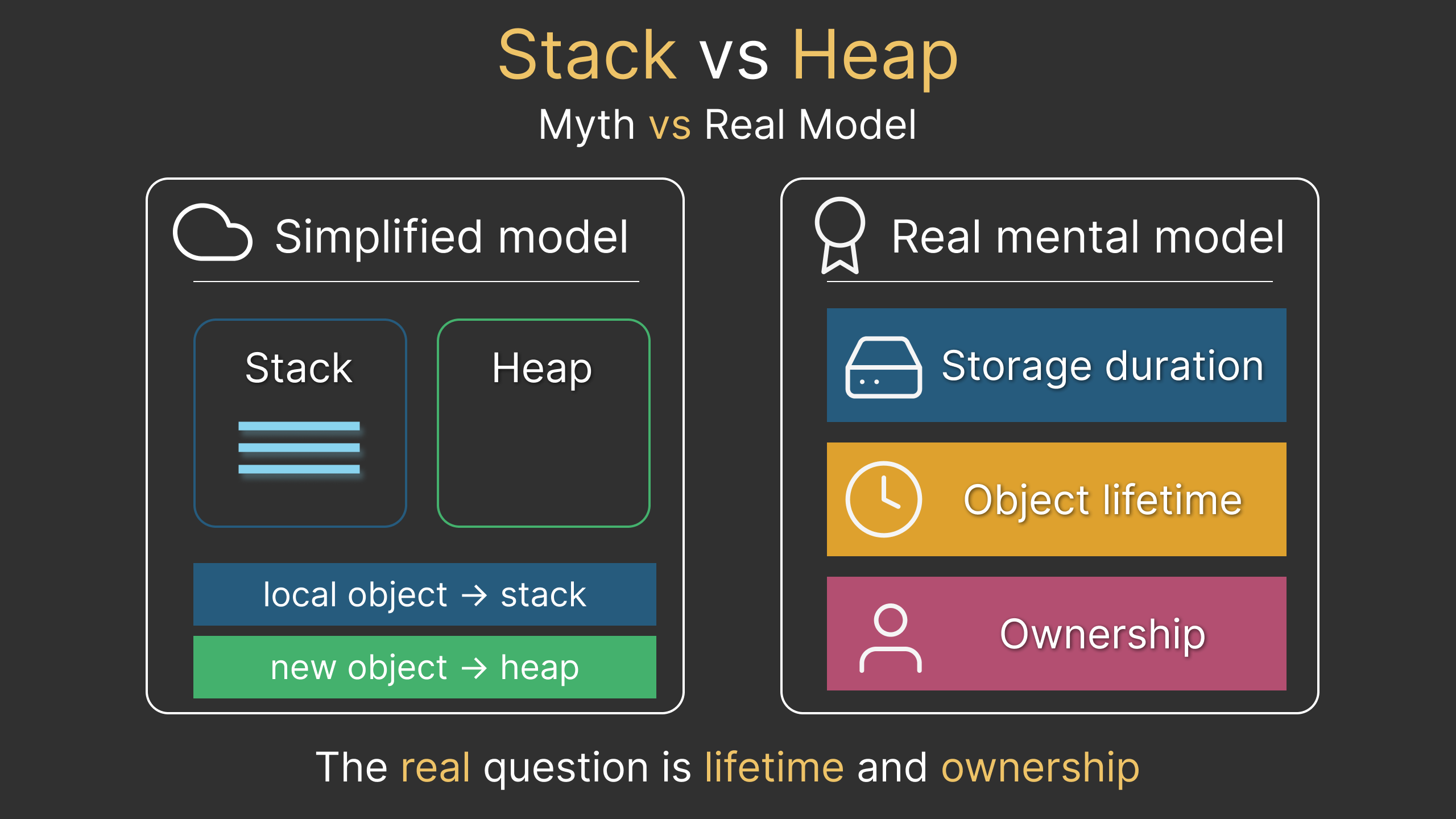
C++ Object Creation: Stack, Heap, and Lifetime
Stack and heap are useful terms, but they do not fully explain how C++ objects are created and destroyed. This article explores storage duration, object lifetime, ownership, RAII, and the practical reasons for choosing dynamic allocation.
-
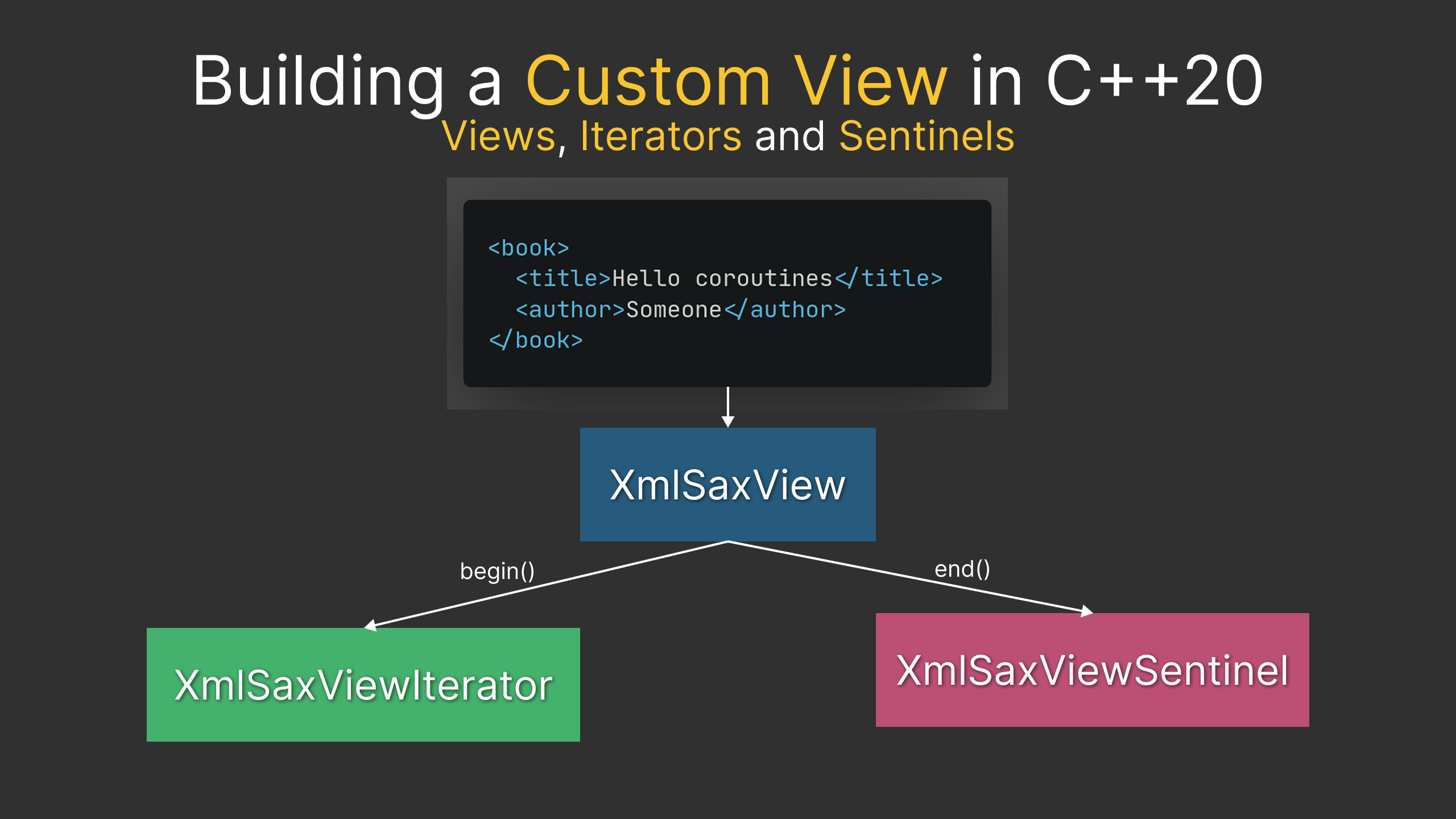
Constructing views in Modern C++. A Practical Guide.
C++20 views are not limited to the adaptors provided by the standard library. When an operation cannot be expressed through their composition, you can implement a custom view. This article demonstrates the process by building a lazy, SAX-like XML parser. Along the way, it explains how views, iterators, and sentinels work together, which standard concepts…
-
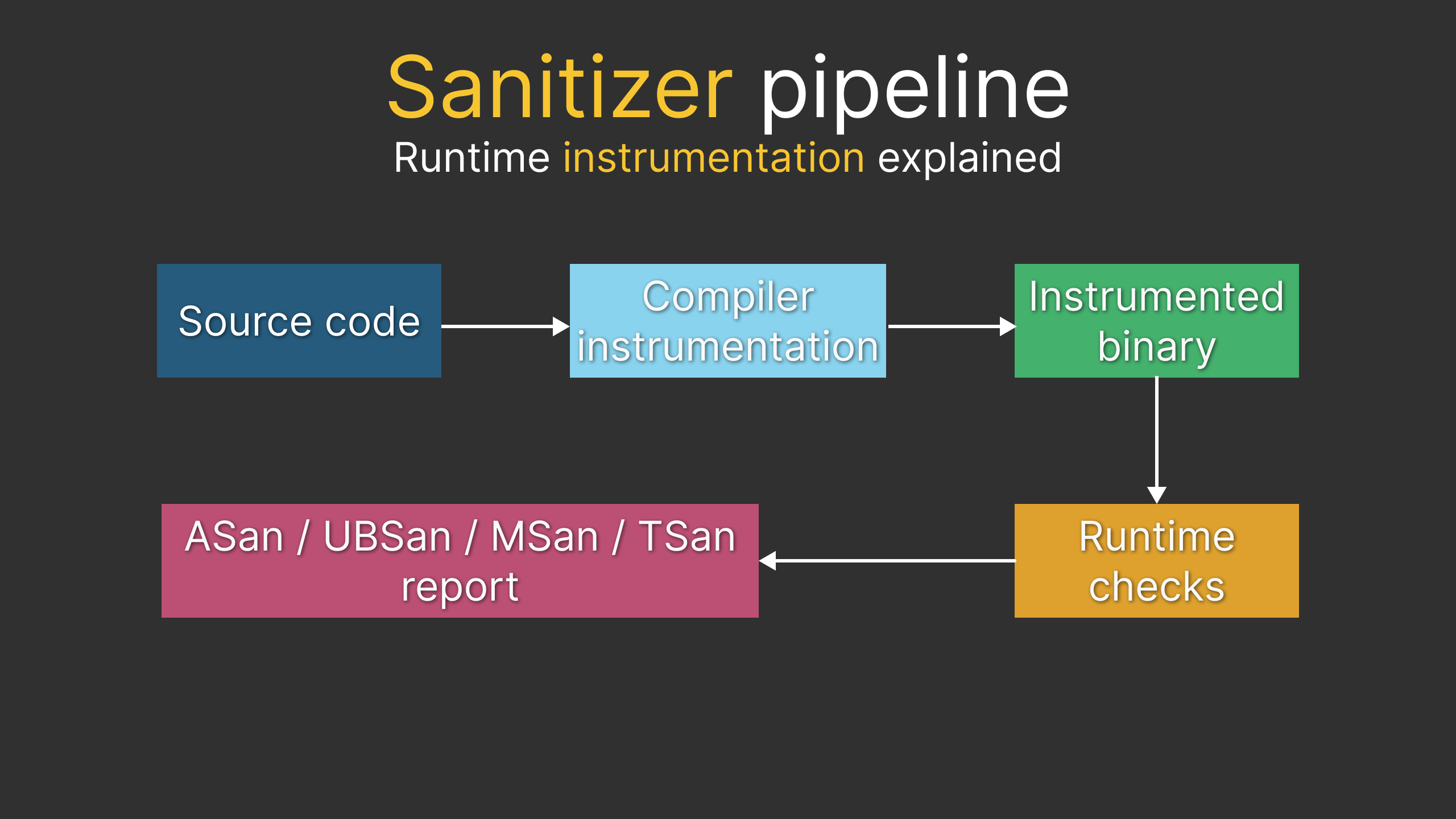
How C++ Sanitizers Work and Where They Miss Bugs
C++ sanitizers can detect memory errors, undefined behavior, uninitialized reads, and data races during execution. This article explains how the main sanitizers work, how ThreadSanitizer tracks happens-before relationships, and why good tests and realistic workloads are still essential.
-
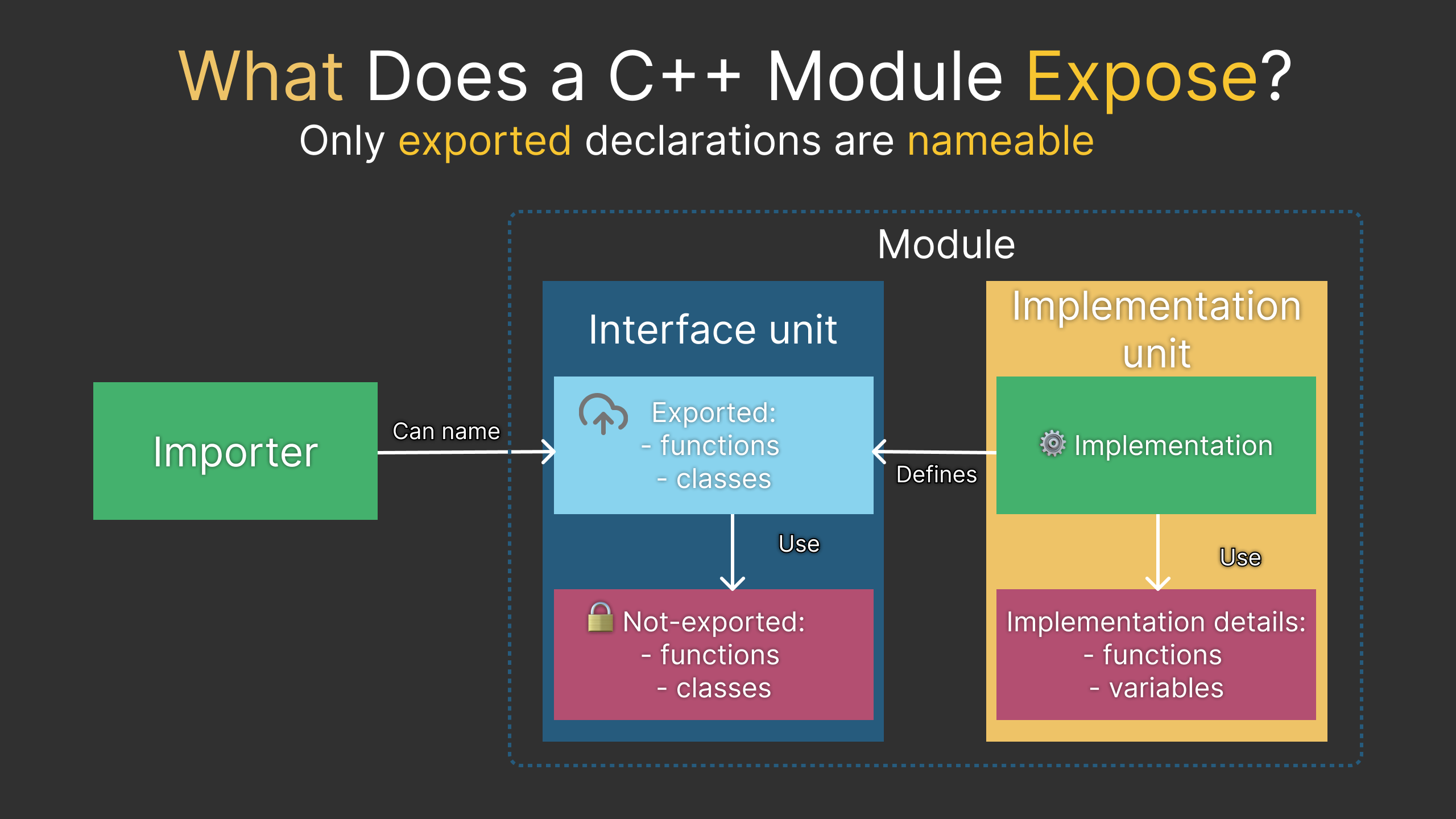
C++20 Modules Don’t Remove the Need for Good Interface Design
A practical look at how to prepare for C++ coding interviews without treating LeetCode as a replacement for real engineering work: train fast thinking, use modern STL, practice std::ranges, and turn interview preparation into useful daily C++ training.
-
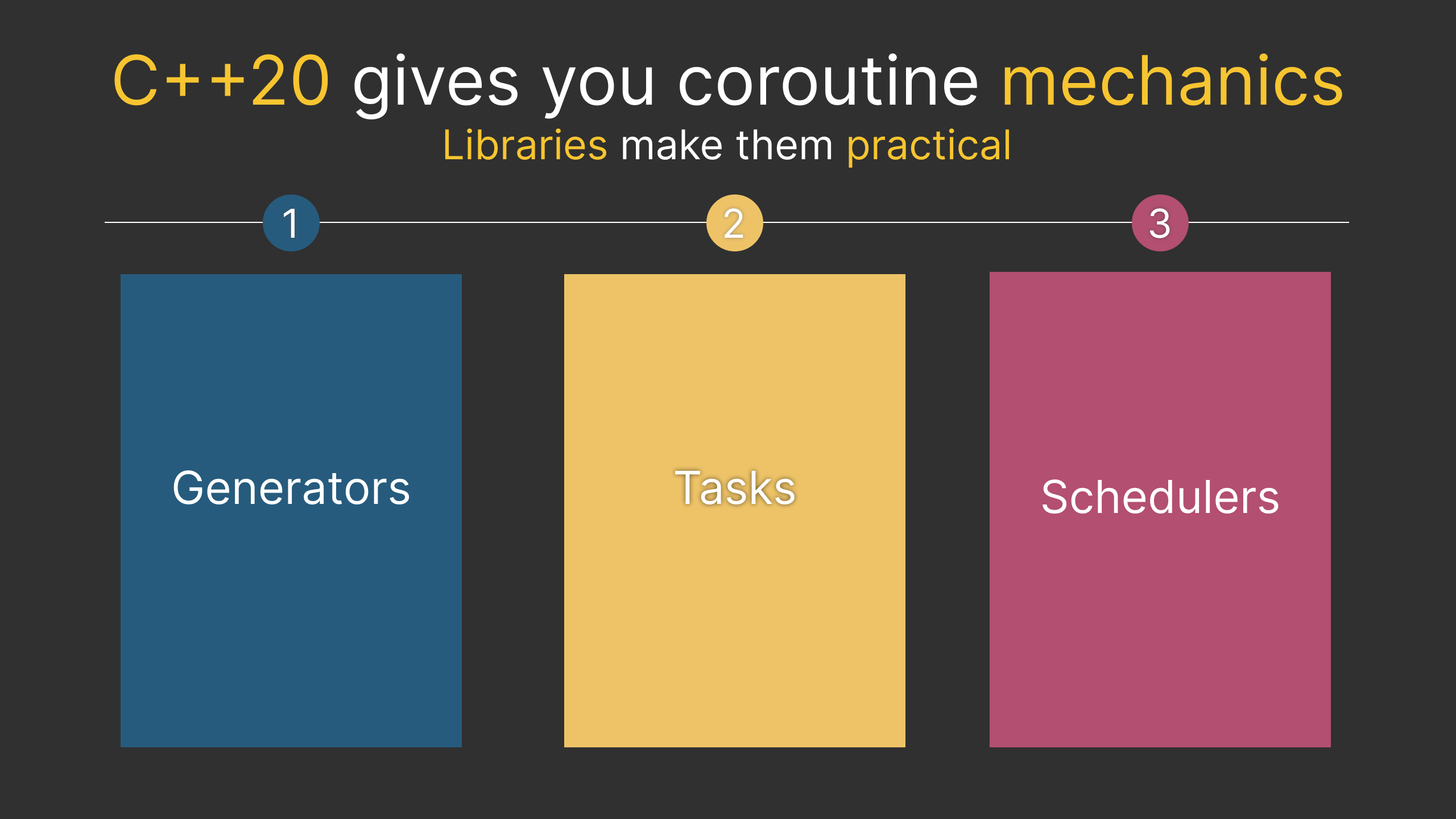
How to Make Coroutines Practical for C++ Projects
C++20 coroutines provide the low-level machinery for suspendable functions, but not a complete async runtime. This article explains what coroutines are, how std::generator makes lazy value generation practical, and how libraries such as libcoro provide tasks, schedulers, and thread pools for real projects.
-
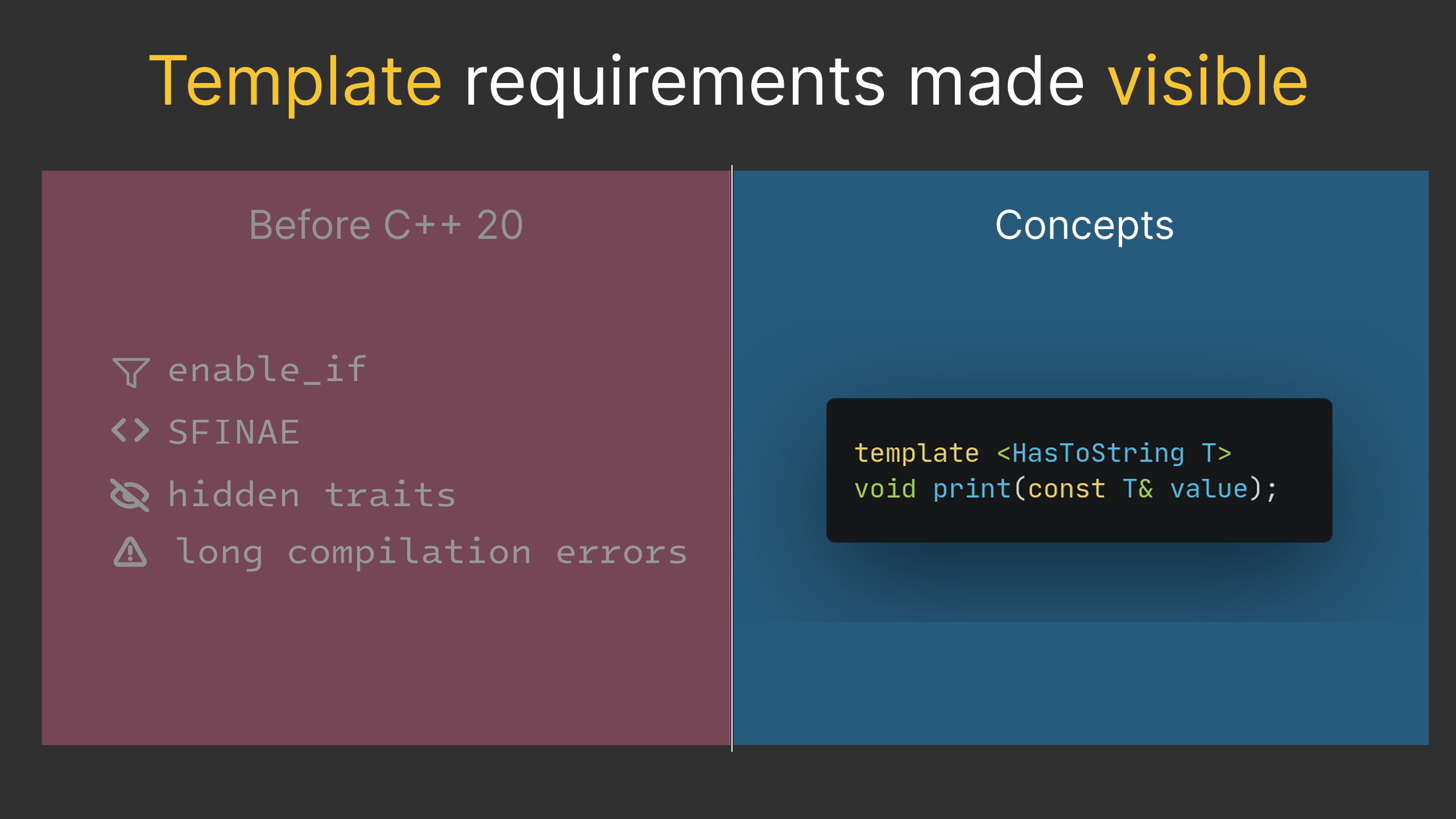
How C++20 Concepts Simplify Generic Programming
C++20 concepts make template requirements explicit, reusable, and easier to diagnose. This article explains how concepts improve generic code, participate in overload resolution, simplify class template specialization, and help build a clear vocabulary for type requirements.
-
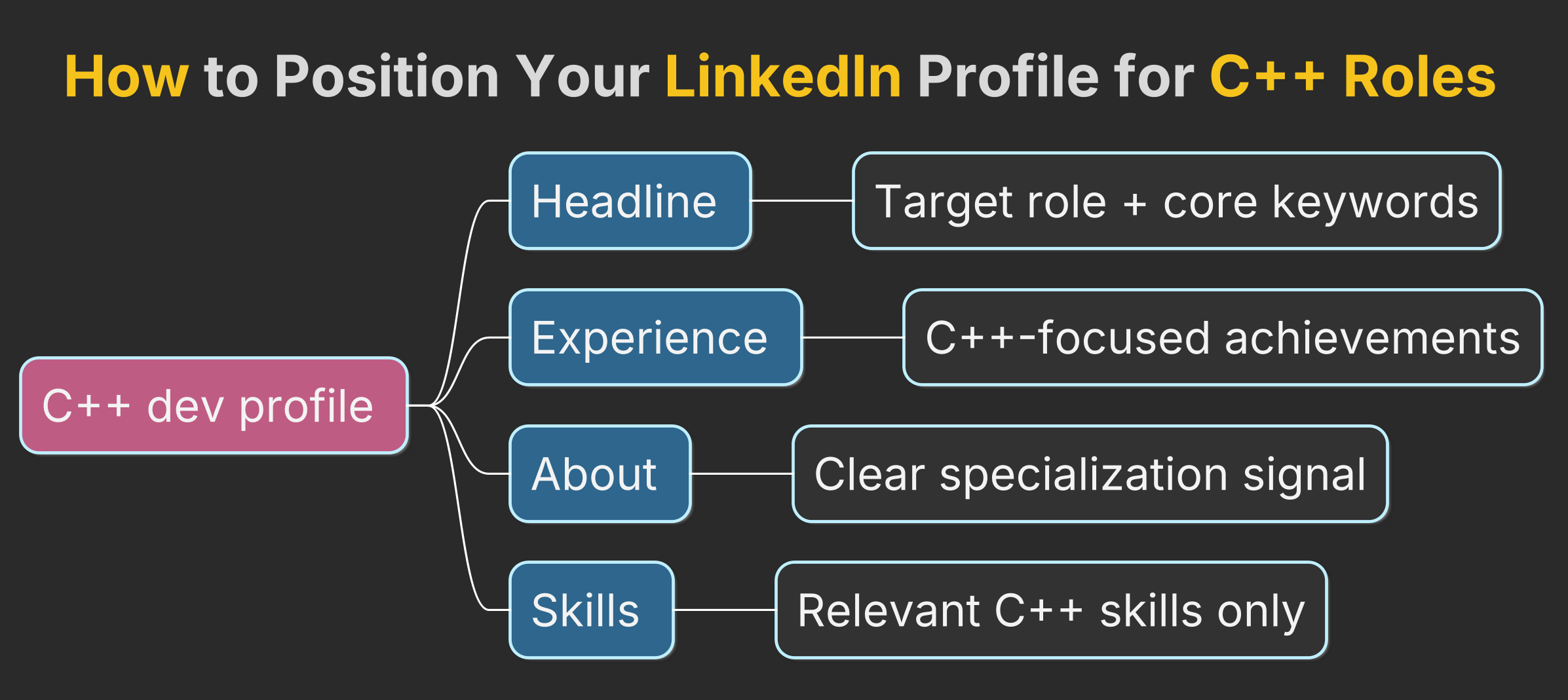
How to Get an Interview Invitation in 2026
Getting an interview invitation in 2026 is not only about sending more applications. This article explains why direct applications often work poorly, how recruiters search for candidates, and how proper LinkedIn positioning can make your profile easier to find and understand.
-
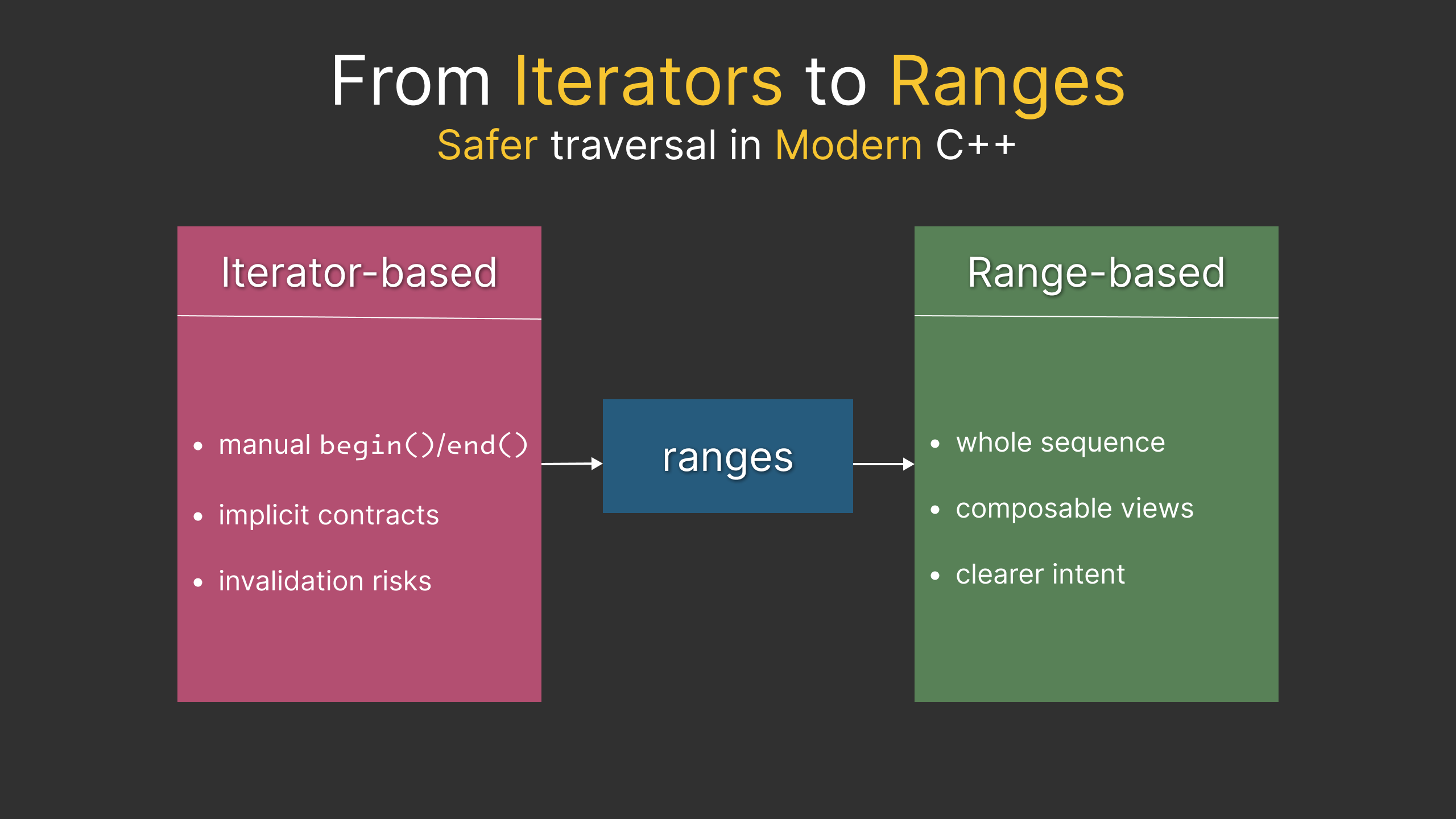
How C++ Ranges Make Iteration Less Error-Prone
C++ ranges and views make traversal code safer and more expressive by replacing manual iterator pairs with higher-level sequence abstractions. This article explains where iterator-based APIs become error-prone, how ranges reduce those risks, and why lifetime still matters.
-
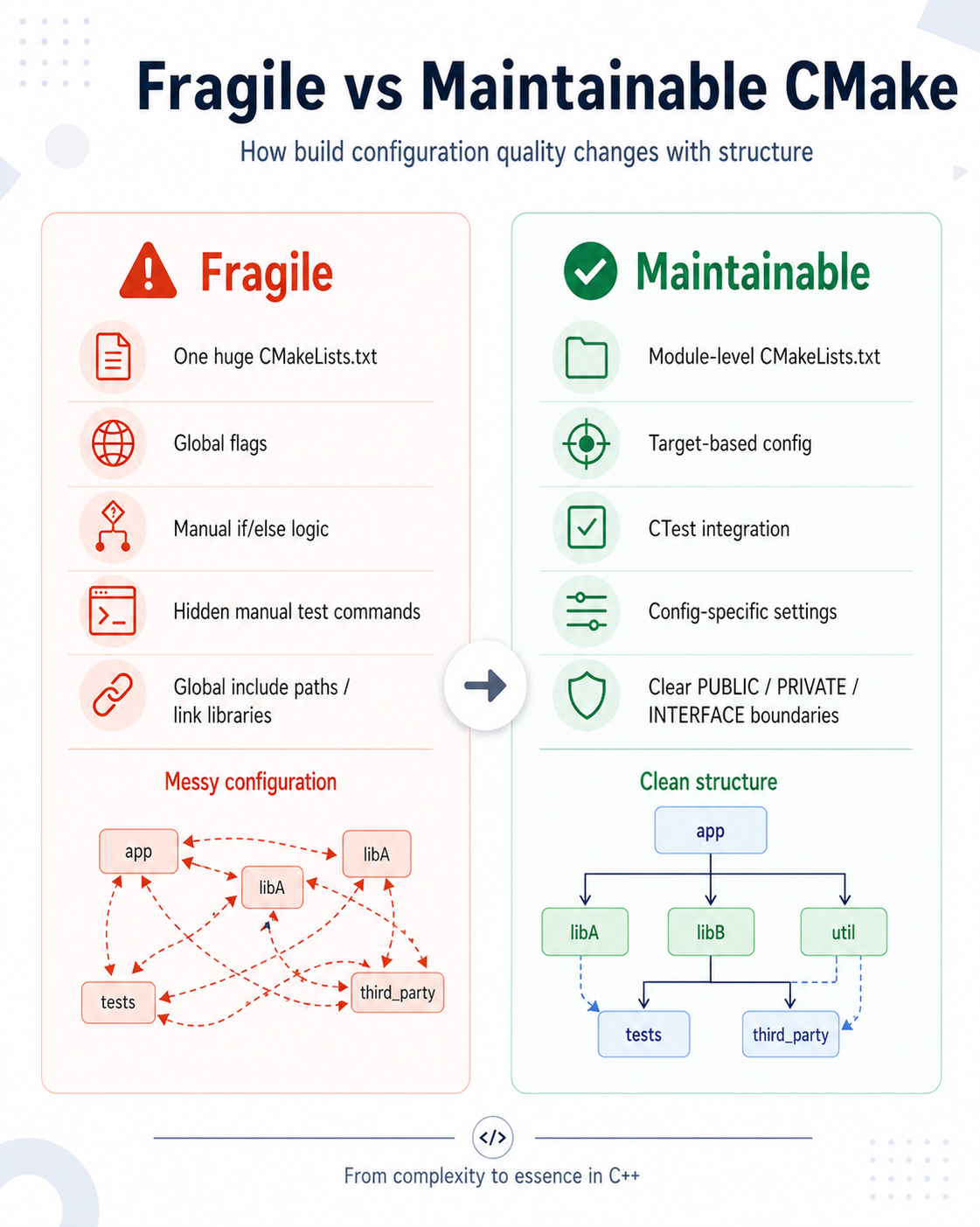
Top 5 CMake Mistakes That Make Your Configuration Fragile
A practical look at common CMake mistakes that make build configuration fragile: overloaded CMakeLists.txt files, manual compiler flags, ignored CTest infrastructure, unnecessary custom logic, and global commands that break target boundaries.
-
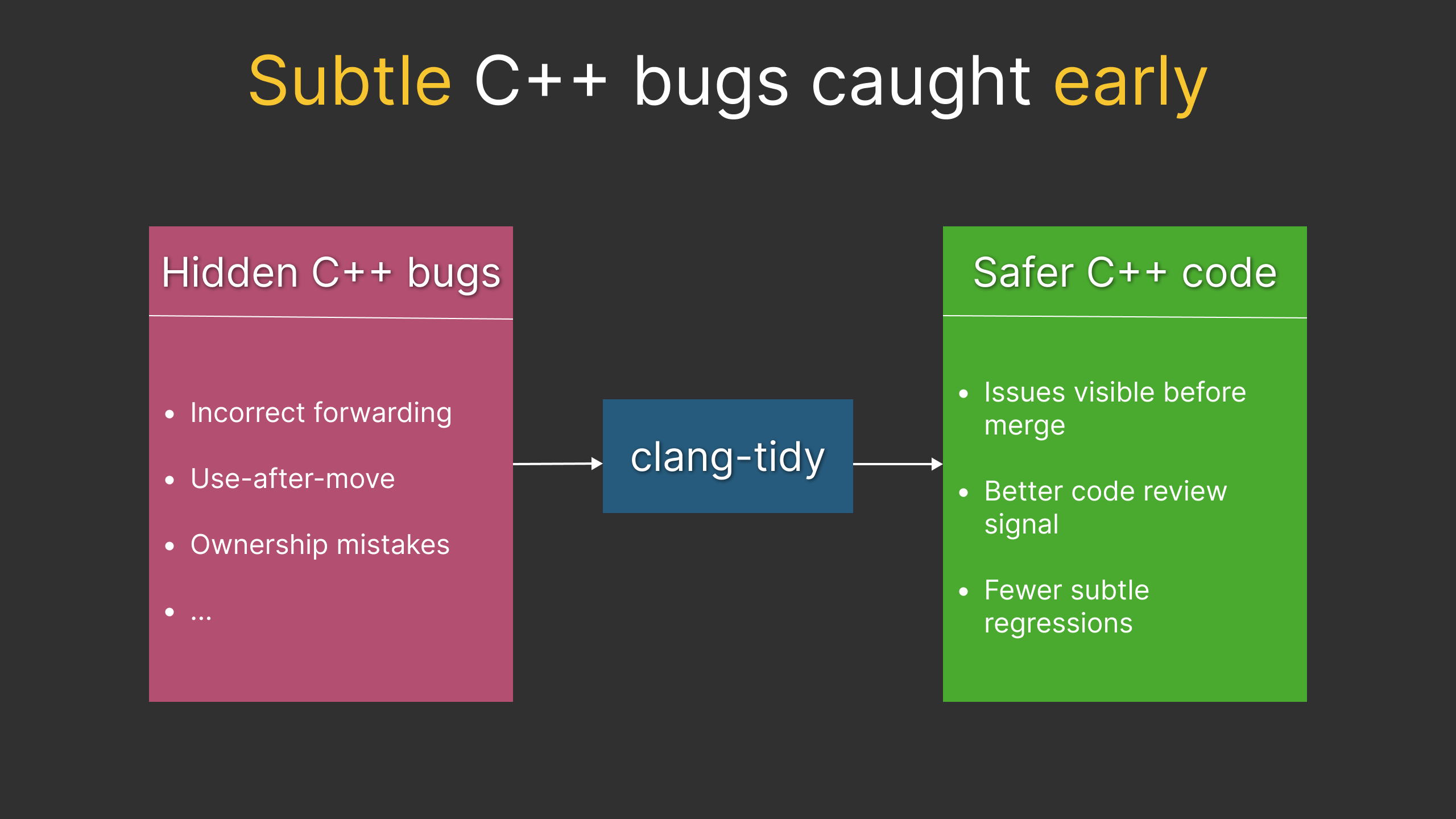
Why clang-tidy matters in real C++ projects — and how to set it up
C++ compiles many mistakes that are still expensive. This article shows how `clang-tidy` helps catch subtle language misuse early — and how to introduce it into a real project without chaos.
-
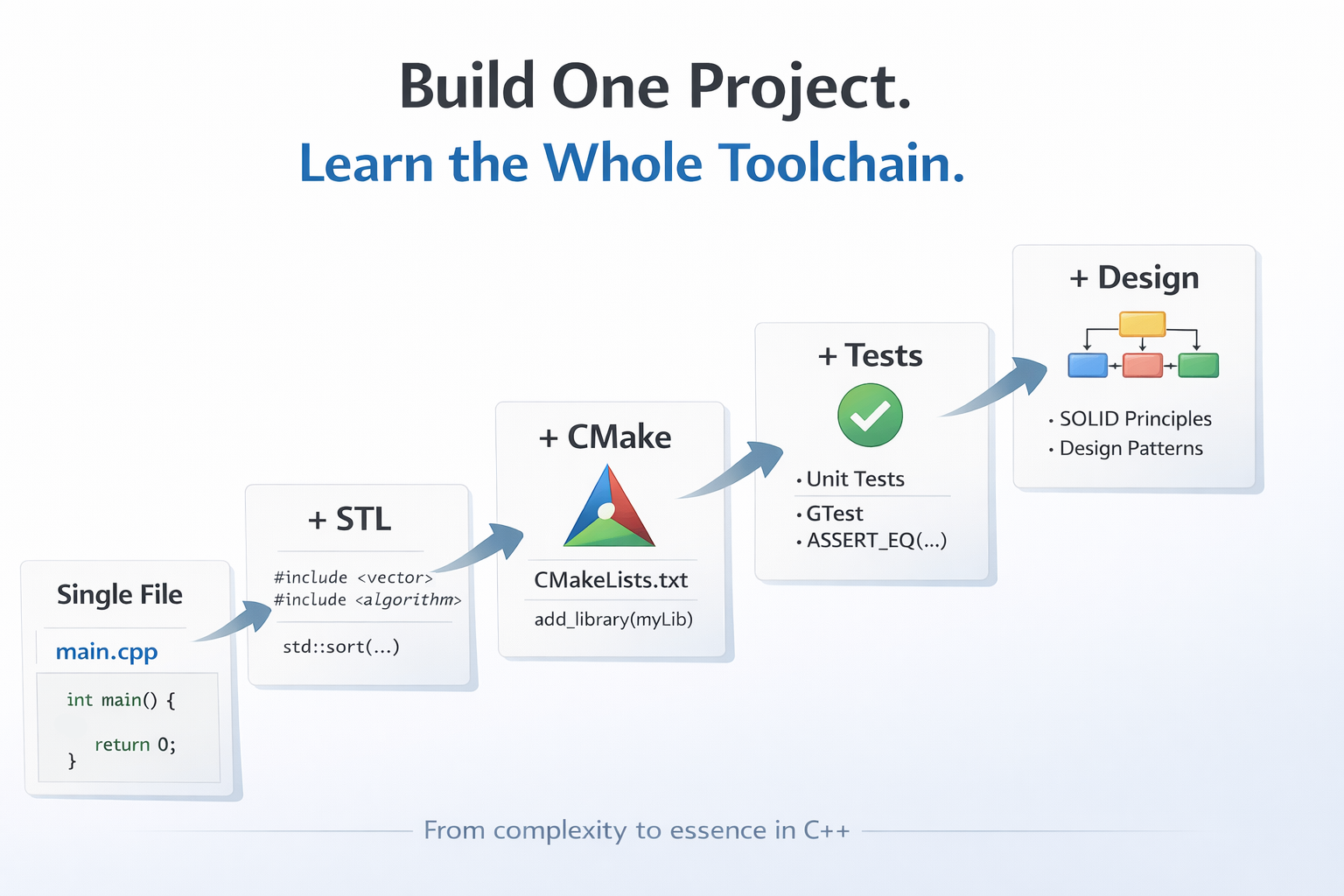
If I Had to Learn C++ Today, Here’s What I’d Do
A practical C++ learning path: what to learn first, what to postpone, and how to build real skills through one project.
-
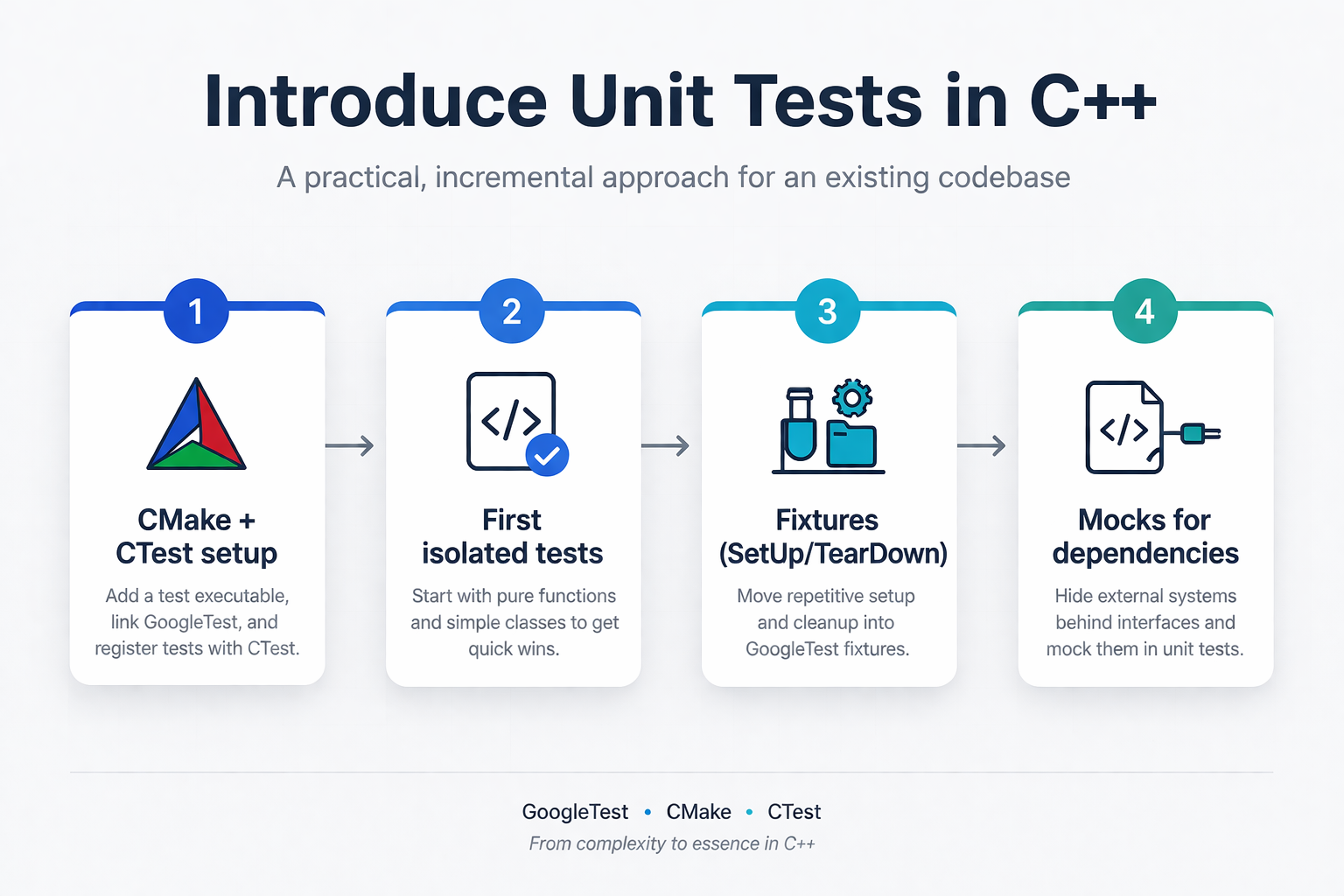
How to Introduce Unit-Tests in Your Project
Unit tests don’t have to be a “big rewrite.” This article shows a practical way to introduce unit tests into an existing C++ project: integrate GoogleTest with CMake/CTest, start with isolated code, scale with fixtures, and mock external dependencies without turning your codebase upside down.
-
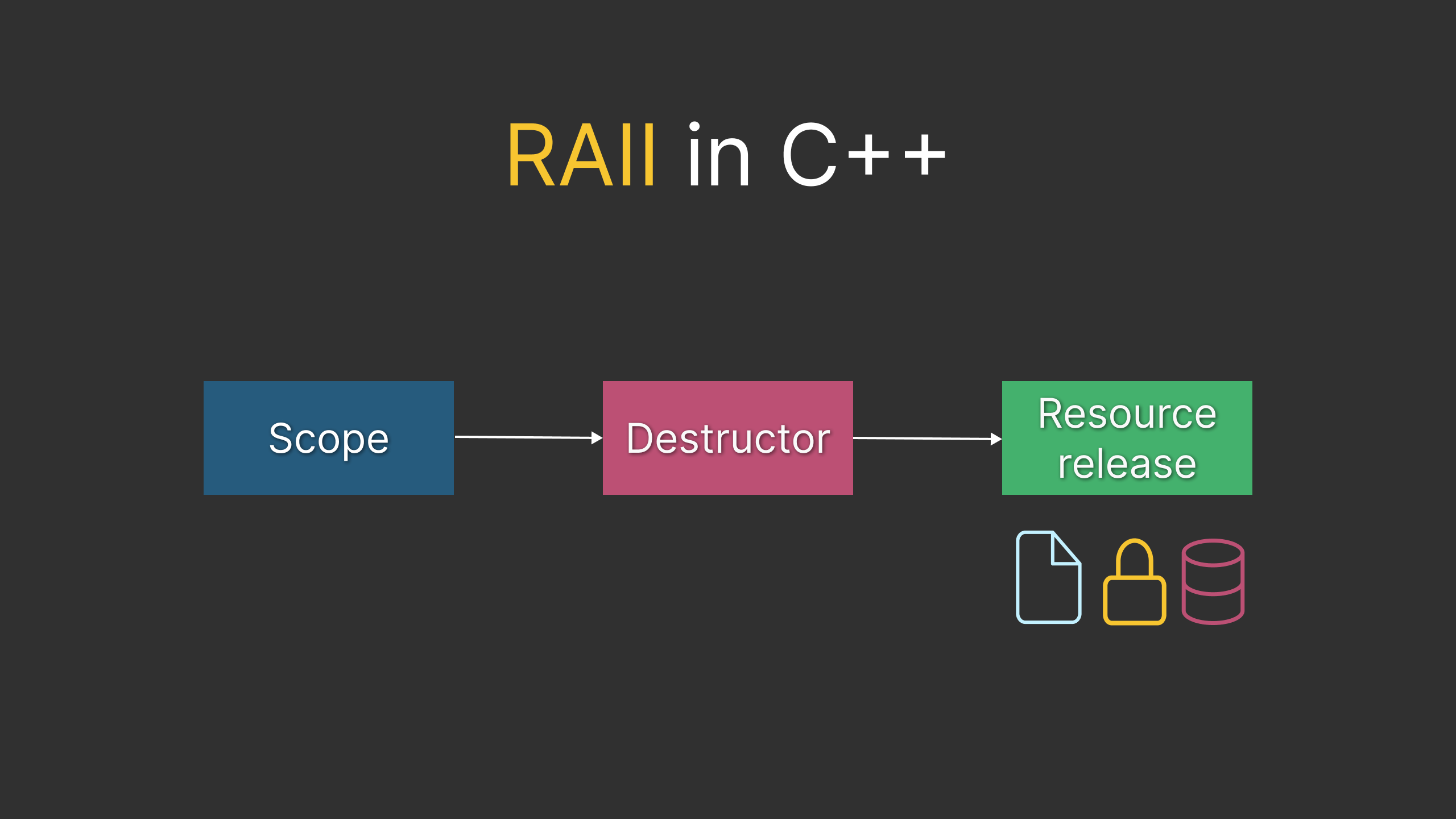
RAII in C++
* Manual resource management is fragile and exception-unsafe. * RAII makes cleanup automatic and reliable. * Prefer standard RAII types: `std::unique_ptr`, `std::lock_guard`, `std::fstream`, containers. * Aim for the **Rule of Zero**: let RAII members define correct destruction and ownership.
-
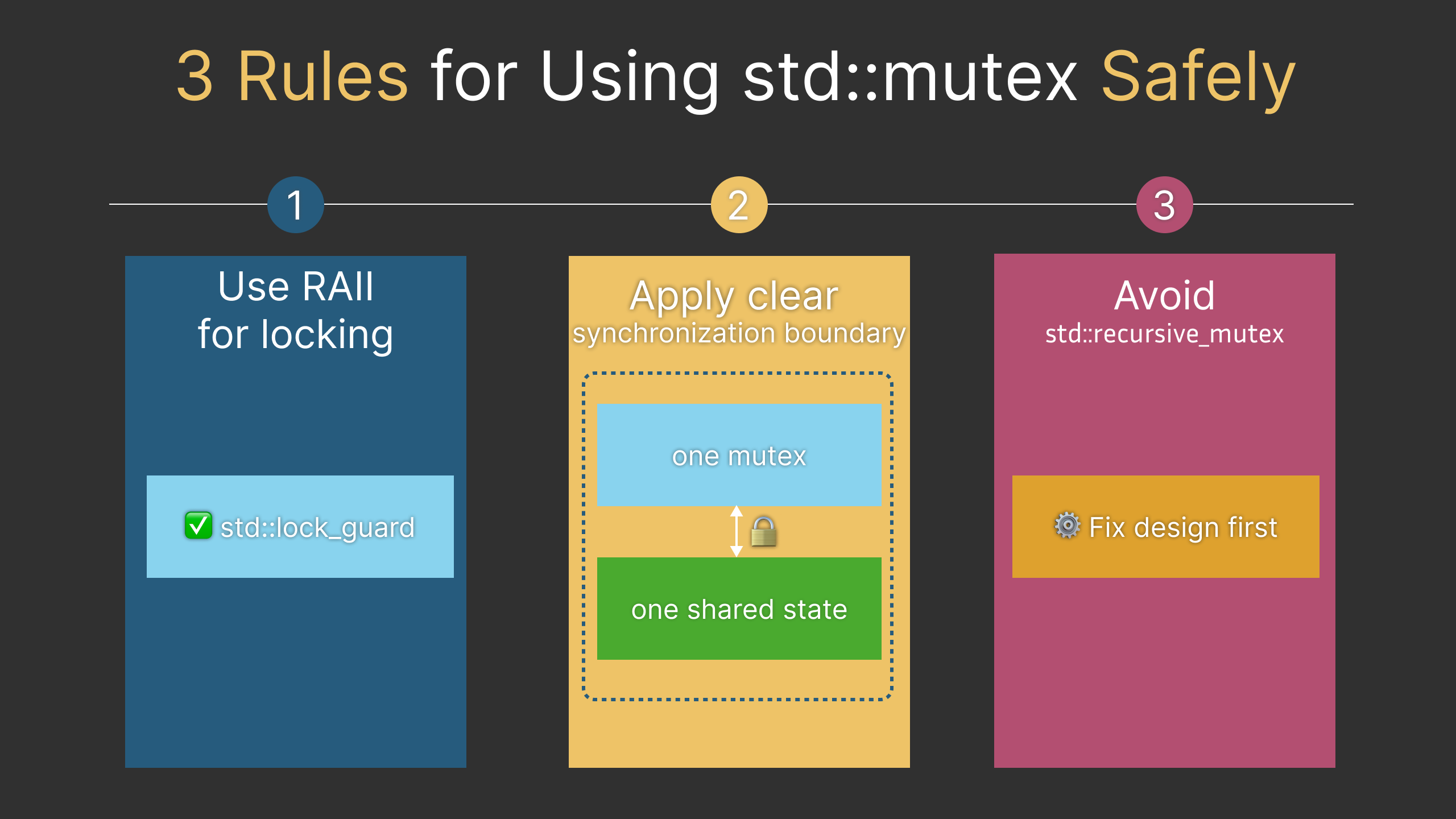
std::mutex Isn’t Enough: 3 Rules for Using It Safely
Adding std::mutex does not automatically make C++ code thread-safe. This article breaks down three practical rules for using std::mutex safely: rely on RAII, keep synchronization boundaries explicit, and treat std::recursive_mutex as a design smell before treating it as a solution.
-
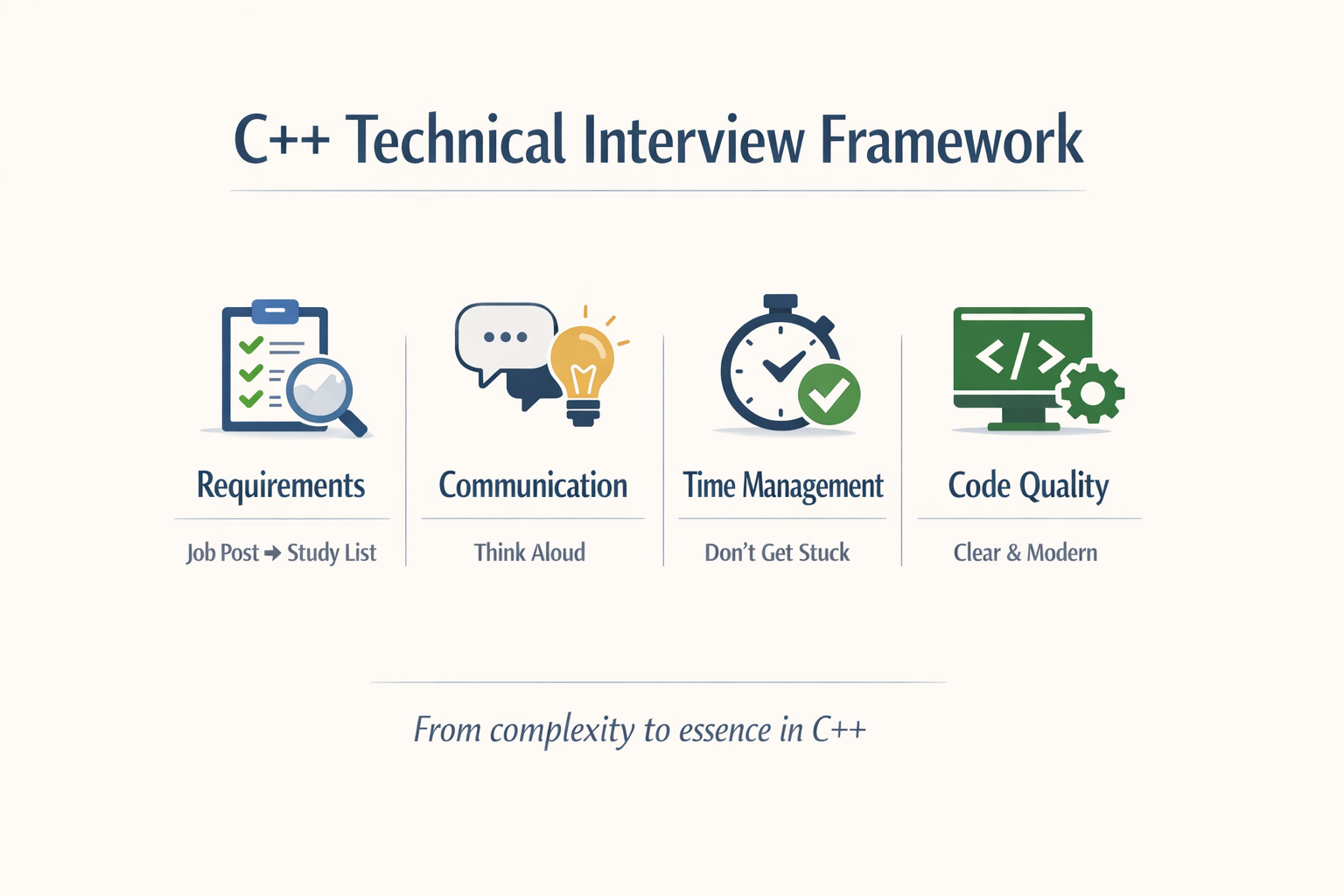
From Stress to Structure: A Practical C++ Interview Framework
A technical interview can feel chaotic: time pressure, unfamiliar people, and the need to explain your thinking clearly. This article turns that complexity into a simple C++ interview framework: what interviewers evaluate, how to communicate, how to manage time, and what “clean modern code” should look like under pressure.
-
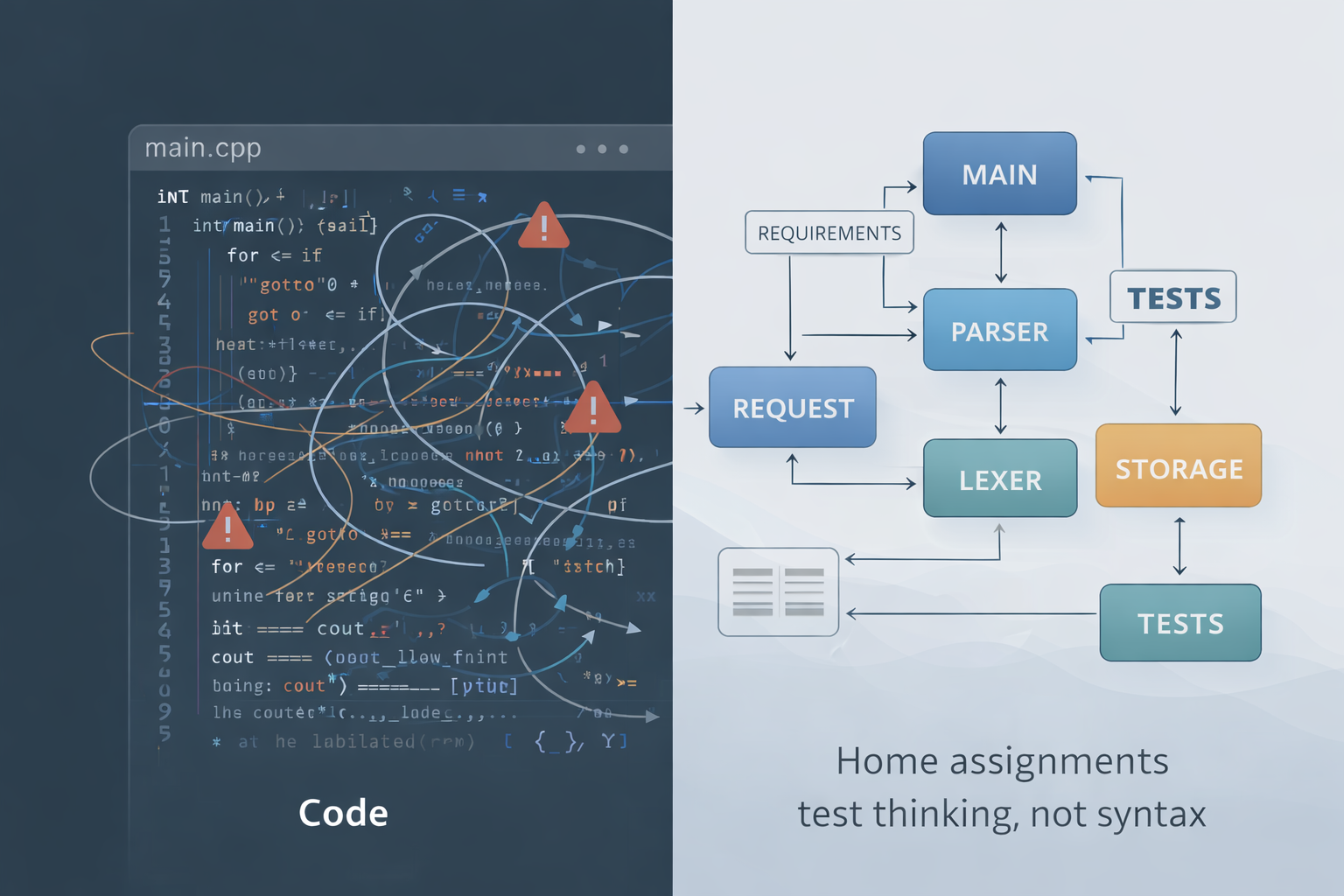
Most C++ home assignments aren’t about writing code.
Most C++ home assignments aren’t really about writing code. They’re about how you think, structure a solution, and communicate trade-offs. This article explains what interviewers actually look for — and how to approach take-home tasks like a real engineer, not a LeetCode machine.
-
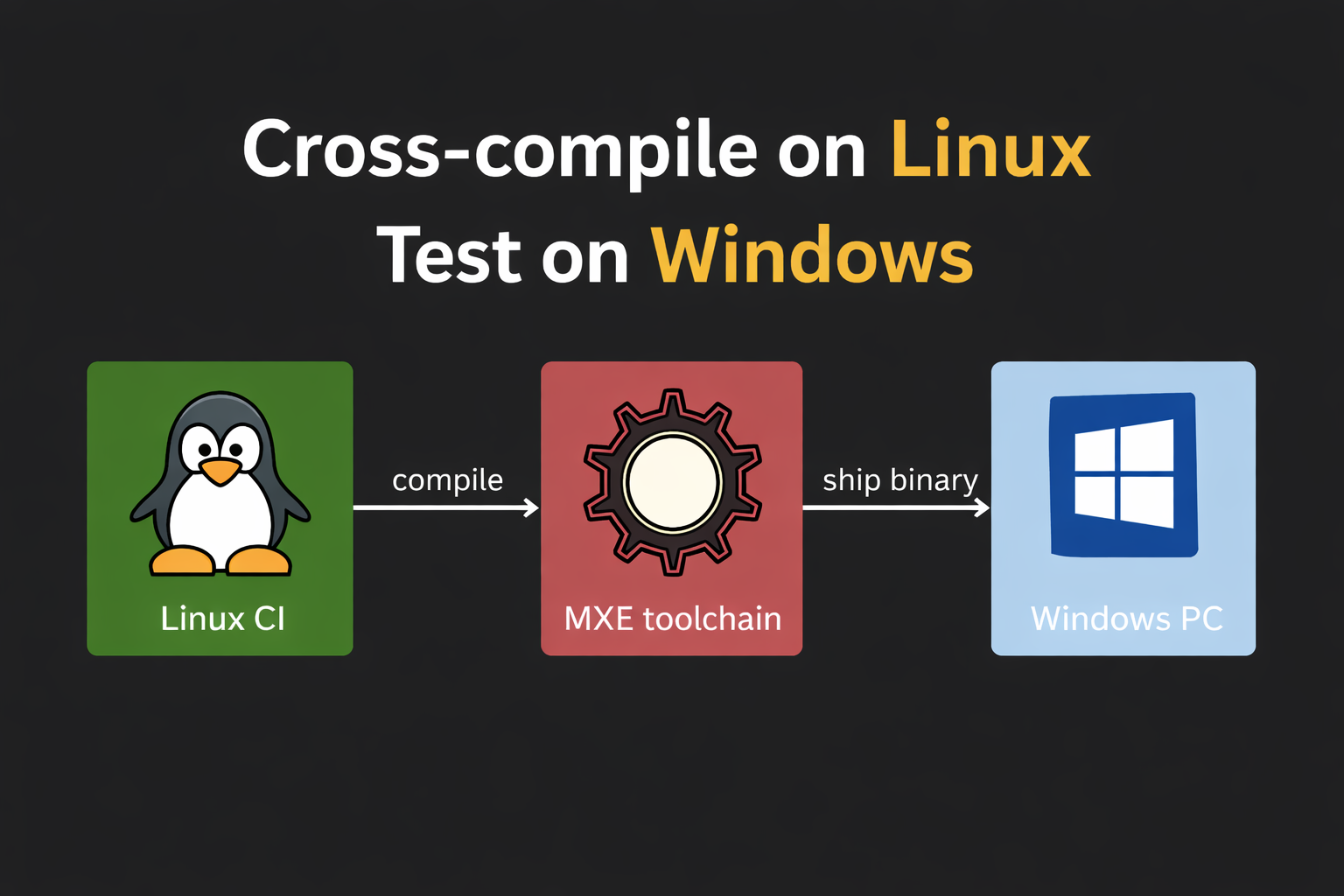
Cross-compilation for Windows. Why not?
Build Windows binaries from Linux without maintaining a full Windows build environment. MXE + Docker setup, toolchain builds, and shipping DLL dependencies.
-
C++ Transactional Memory
Transactional memory looks like an elegant solution to concurrency problems — but in C++, it comes with serious trade-offs. This article walks through GCC’s transactional memory implementation, explains how atomicity and rollback work in practice, and compares performance against mutex-based solutions. You’ll learn when transactional memory simplifies concurrent code — and when it makes things…
-
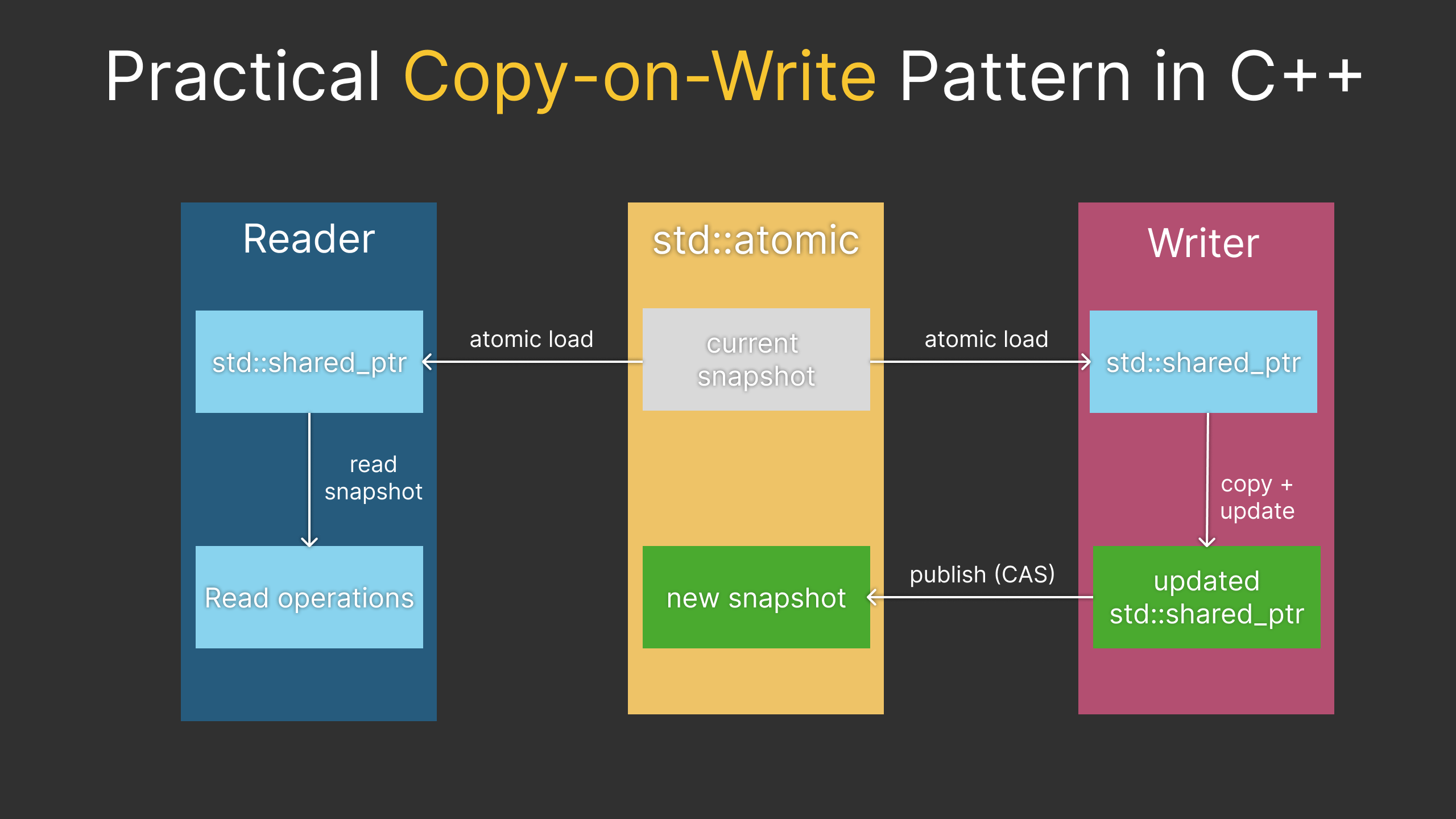
From Mutexes to Snapshots: Copy-on-Write for Read-Mostly Data in C++
When reads dominate writes, a mutex can turn into a scalability bottleneck. This article explains a simple copy-on-write “snapshot” pattern for C++20 using std::atomic: lock-free reads in user code, safe atomic updates for writers, and the trade-offs that decide when this approach is worth it.
-
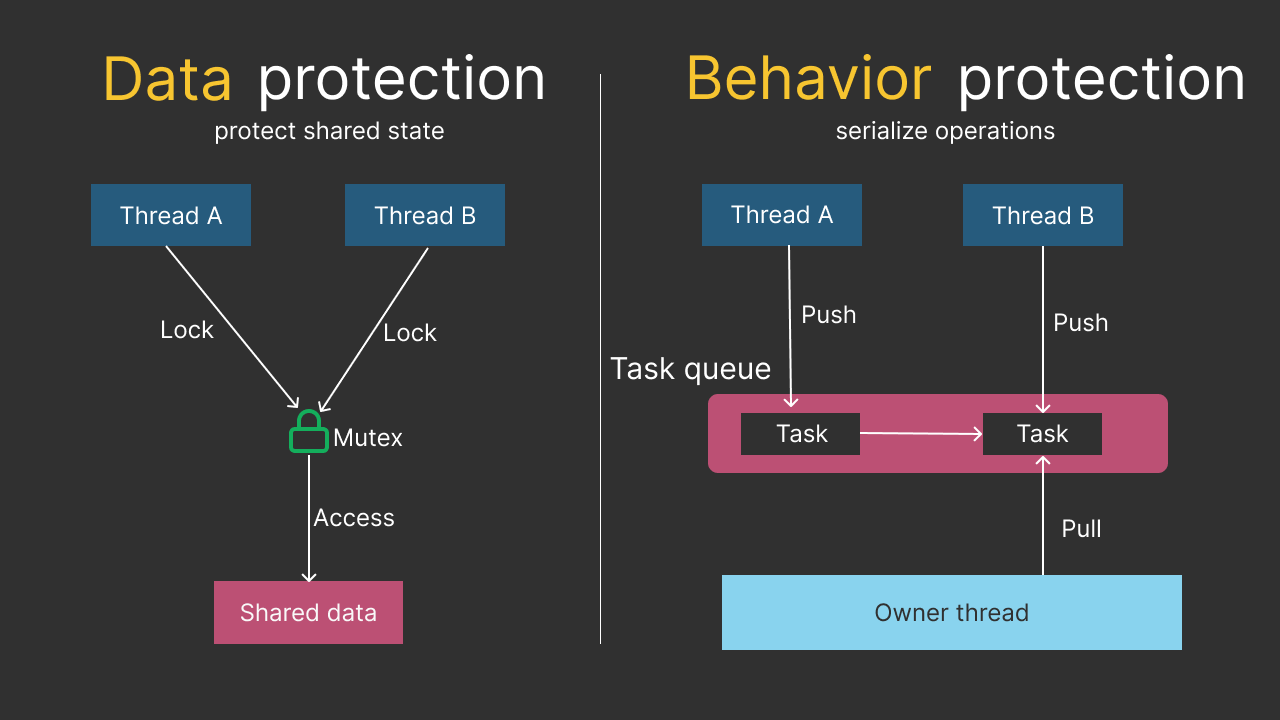
Protecting Data vs Protecting Behavior in C++ Concurrency
Mutexes protect data. Actor-like queues protect behavior. Here’s why the second approach often makes correctness easier—and when it’s the wrong choice.