A free practical guide with:
- when to use
std::mutexvsstd::atomic - when
std::condition_variableis the right tool - where semaphores,
std::latch, andstd::barrierfit - common pitfalls and simple rules of thumb
Enter your email to get the free guide and join From Complexity to Essence in C++ — my monthly newsletter with practical C++ and CMake deep dives.
Enter your email to get the guide.
What happens next
- Enter your email.
- Confirm your subscription.
- Get the PDF immediately and join From Complexity to Essence in C++.
One focused C++ or CMake email per month. Unsubscribe anytime.
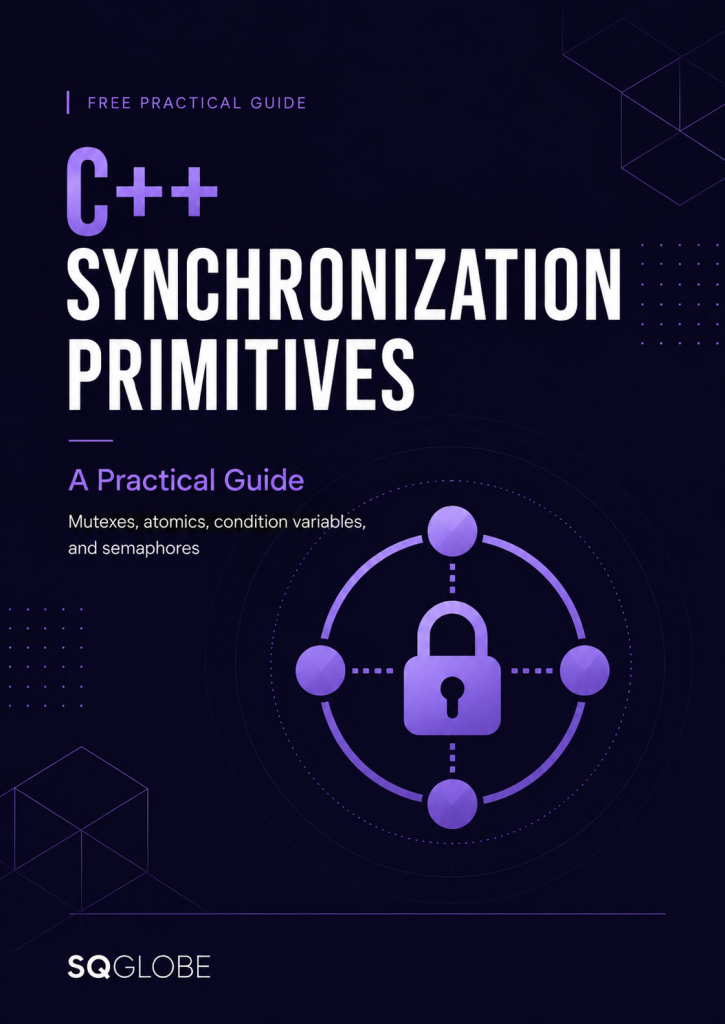
After reading this guide, you’ll know
- when to use
std::mutexinstead ofstd::atomic - when waiting should be done with
condition_variable - when semaphores, latches, and barriers are the better fit
- what common mistakes to avoid
The guide also includes the monthly newsletter
When you get the guide, you’ll also subscribe to From Complexity to Essence in C++.
One focused email per month with practical deep dives into modern C++, CMake, design, and real-world engineering trade-offs.
No spam. Unsubscribe anytime.
Build a stronger mental model of C++
Choosing a synchronization primitive isn’t about the preference, it’s about code correctness.
Enter your email to get the free guide and join From Complexity to Essence in C++ — my monthly newsletter with practical C++ and CMake deep dives.